(To download the white paper, scroll to the bottom)
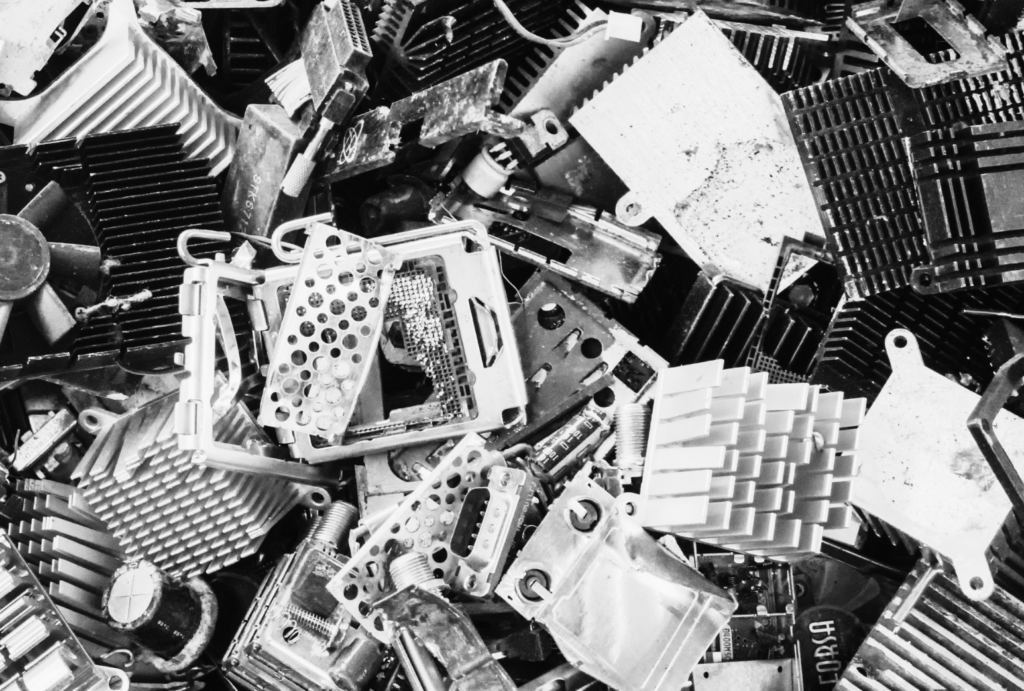
The next critical mineral breakthrough may not be buried underground. It may be sitting in a junk drawer or a landfill.
Solar panels, wind turbines, electric vehicles, consumer electronics, and defense technologies all depend on vast quantities of lithium, cobalt, nickel, and other critical minerals.
For decades, the dominant question has been: where can we mine more?
But that may be the wrong place to begin.
Once critical minerals have been extracted and embedded in batteries, electronics, and other technologies, they do not disappear. Yet millions of mineral-rich products are discarded every year, taking valuable materials—and enormous economic potential—with them.
Pyxera Global’s new white paper with SEC Newgate UK, “Beyond the Mine: Building a UK–India Strategic Hub for Critical Mineral Circularity,” advances a circular model: the fastest path to expanding critical mineral supply may not be opening another mine.
It may be recovering the minerals already circulating through our economies.
Developed from a roundtable convened during London Sustainability Week, the paper explores how the United Kingdom and India could build a strategic, circular supply chain capable of recovering critical minerals from batteries and electronic waste and returning them to productive use.
From Waste Stream to Strategic Critical Mineral Supply
At the center of the white paper is a proposal for a UK–India Circular Corridor: a bilateral mechanism that treats recovered batteries and electronic waste not as garbage, but as strategic mineral supply.
The concept builds on the complementary strengths of both countries.
The United Kingdom brings sophisticated low-carbon recovery research, technology development, and certification frameworks increasingly required by original equipment manufacturers.
India brings industrial-scale processing, metallurgical expertise1, a growing innovation ecosystem, and cost-competitive infrastructure.
Together, those capabilities could support something both countries may be able to build more effectively together: a reliable, traceable, commercially viable pipeline for recovering critical minerals and returning them to the global economy.
The corridor would connect recovery, collection, traceability, research, processing, investment, policy, and market demand. It would also help transform fragmented national efforts into a coordinated cross-border system.
Why This Matters Now
The scale of the opportunity is difficult to ignore.
Global electronics recycling rates remain below 20%, even as demand for lithium and other critical materials continues to accelerate. Valuable feedstock is being buried, exported without adequate controls, or left unused precisely when manufacturers and governments are searching for more secure sources of supply.
The global recovery market is projected to reach approximately $200 billion by 2050, yet less than one-fifth of that opportunity is being captured today.
At the same time, the economics are changing.
The cost of recovering lithium is moving closer to the cost of extracting it from newly mined material, with a potential crossover projected between 2027 and 2030. That shift could make circular recovery not merely an environmental alternative, but an increasingly competitive industrial strategy.
This is bigger than recycling.
It is an economic-development opportunity.
It is a manufacturing opportunity.
It is a supply-chain resilience opportunity.
It is a national-security opportunity.
And, if designed intentionally, it can also become a community wealth-building opportunity.
Where Investment Can Enter
The white paper identifies two particularly promising areas for investment.
The first is recovery and traceability infrastructure. This includes systems that collect, sort, certify, transport, and track batteries and electronic materials across the supply chain. Comparable infrastructure investments may produce internal rates of return in the 8% to 12% range.
The second is processing, hydrometallurgy, and technology licensing. These investments support the technical processes needed to separate and recover valuable minerals from discarded products. Comparable opportunities may generate returns in the 14% to 18% range.
But capital alone will not create a functioning corridor.
The greatest challenge is connective.
Governments, manufacturers, researchers, recyclers, investors, technology providers, communities, and civil-society organizations often operate within separate systems. Even where strong technologies or promising companies exist, the broader pipeline may remain fragmented, difficult to finance, or too risky to scale.
That is where Pyxera Global and the Circular Supply Chain Coalition (CSCC) can add distinct value.
Our role is to help build the architecture required to make circularity work: connecting the right actors, identifying viable opportunities, aligning incentives, reducing risk, strengthening local capacity, and helping move ideas from isolated pilots to scalable systems.
In that role, Pyxera Global and the CSCC can serve as ecosystem architects, conveners, de-risking partners, and pipeline generators.
The Community Question Cannot Be Secondary
A circular critical mineral economy should not reproduce the same inequities that have characterized many traditional extractive systems.
Communities closest to mining, waste, informal recycling, and industrial processing have often carried the greatest environmental and health burdens while receiving the smallest share of the economic value.
A credible circular corridor must be designed differently.
That means creating dignified livelihoods, investing in worker safety, recognizing the role of informal-sector expertise, strengthening local enterprises, and ensuring that communities participate meaningfully in decisions that affect them.
It also means asking a more ambitious question: how can critical-mineral recovery generate not only supply, but shared prosperity?
Technology will be essential. So will finance and policy. But the long-term legitimacy of this work will depend on whether it produces tangible value for the people and places most directly connected to the system.
Key Findings
- Global electronics recycling rates sit below 20%, even as lithium demand is projected to rise 350% in India by 2047 and 1,100% in the UK by 2035 — leaving valuable feedstock landfilled instead of recovered.
- The UK and India hold complementary strengths: the UK brings low-carbon recovery research and the certification frameworks OEMs (original equipment manufacturers) increasingly require; India brings industrial-scale metallurgical processing and cost-competitive infrastructure.
- The recovery market is projected to reach roughly $200 billion by 2050, with less than a fifth of that opportunity captured today, and the cost of recovering lithium is already closing in on the cost of mining it with a crossover point projected between 2027 and 2030.
- Two clear entry points exist for capital: recovery and traceability infrastructure (comparable to 8–12% internal rate of return (IRR) in similar infrastructure), and processing/hydrometallurgy and technology licensing (comparable to 14–18% IRR).
- Pyxera Global and the Circular Supply Chain Coalition are positioned as ecosystem architect, de-risking partner, and pipeline generator — the connective work of turning two incomplete national systems into one working corridor.
Ways to Engage
| If you are a… | Next step |
|---|---|
| Corporate Sustainability and Supply Chain Leaders | Explore offtake agreements, traceability partnerships, supplier-development initiatives, or strategic collaborations anchored in the UK–India framework. |
| Philanthropic Funders | Consider catalytic grants, guarantees, first-loss capital, technical assistance, or community-centered investments that can reduce early-stage risk and help attract commercial capital. |
| Policymakers | Participate in briefings and working sessions focused on how a Green Corridor or similar bilateral mechanism could function in practice. |
| Coalition or Civil Society Organizations | Help ensure that workforce development, environmental justice, community ownership, safety, and local economic participation are embedded in the corridor from the beginning. |
| Technology Providers, Researchers, and Industry Partners | Contribute recovery technology, certification expertise, market intelligence, licensing models, or processing capacity. |
See the Opportunity Up Close in 2027
In 2027, Pyxera Global plans to offer an in-depth educational tour for leaders who want to move beyond the theory and see the critical mineral circular economy in action.
The experience will be designed to connect participants directly with innovators, processors, researchers, policymakers, community partners, and other stakeholders helping shape the UK–India corridor.
Participants will explore questions such as:
- What does a functioning circular critical mineral system look like on the ground?
- Which technologies and business models appear most promising?
- What prevents promising projects from reaching scale?
- How can investment be structured to reduce risk and attract additional capital?
- How can communities participate in—and benefit from—the economic value being created?
- What roles can companies, governments, funders, and civil society play in building the corridor?
The tour will provide a structured learning experience focused on translating global ambition into investable, scalable, and community-rooted action.
Join the waitlist below to receive early information about the proposed itinerary, timing, participation criteria, and registration process.
Where This Goes Next
The release of the white paper is not the end of the conversation. It is an invitation to build.
In the months ahead, Pyxera Global and its partners will continue exploring how the proposed corridor can move from concept to implementation—identifying viable projects, strengthening partnerships, engaging potential investors, and examining the policy and infrastructure required to support scale.
The world does not only need more critical minerals.
It needs a smarter, more resilient, and more equitable system for finding, recovering, and reusing the minerals it already has.
The next supply chain is already here.
The work now is to build it.
With Thanks to Our Partners
This paper reflects a roundtable convened jointly by Pyxera Global and SEC Newgate UK, and it would not exist without the investors, technologists, and policymakers who shaped it — including Minimines, Sangam / AIC-Sangam, Waste Warriors, Eco Future Metals Capital Partners, Gelion / Battery Minerals, MSCI Inc., Prosemino, the Centre for Process Innovation, ST Associates / Anoigo, Climate Savers / Future Impact Ventures, and Quantum North / Geodesic AI. Full participant details are in the paper.
Download the full white paper and reach out to Jacquelyn Omotalade (Chief Impact & Programs Officer) or Nancy Charaya (Circular Economy Expert) to start the conversation.
- Metallurgy is the science of extracting metals, https://www.ebsco.com/research-starters/engineering/metallurgy ↩︎